Trusted AI
·
October 13, 2026
Which ROI-focused AI should you choose for your business in 2026
How much does it cost to implement internal AI? Find out in our latest article!

In the face of growing challenges, AI offers a promising solution for local authorities and public institutions, provided it is well-designed, accessible, and sovereign.

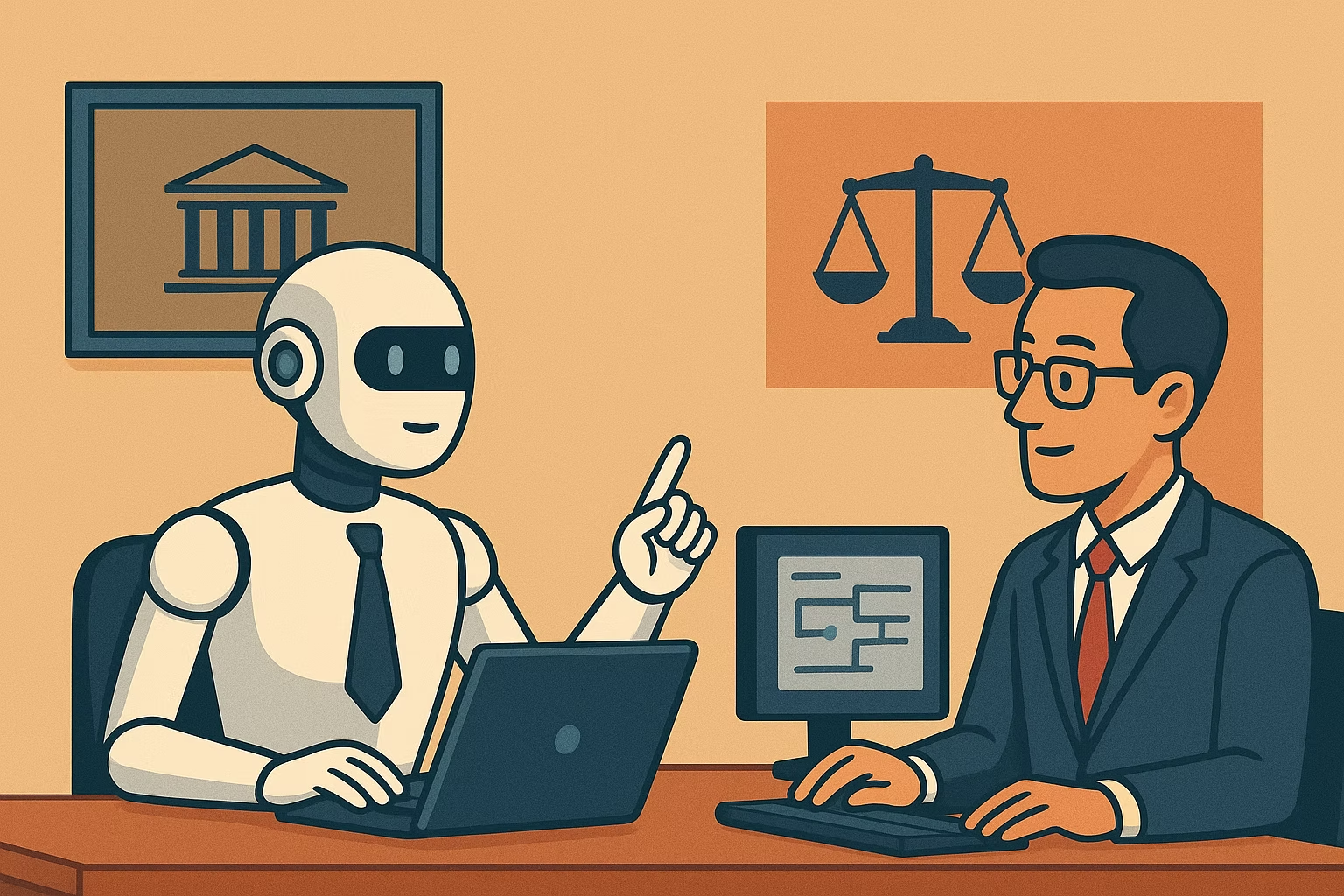
AI has been making its way into businesses for some time now, but what about local authorities and public institutions? While the promises may seem vague and distant, some use cases are beginning to emerge. Faced with an increasing number of challenges, new solutions are appearing, including sovereign solutions that are highly relevant for these organizations.
In recent years, public services and local authorities have been facing an increasing number of social, environmental, and economic issues. Whether supporting their citizens and staff or managing their resources, they must redouble their efforts to meet ever-growing challenges within a constrained or even restricted framework, with one goal in mind: doing more with less.
Faced with these new challenges, technology—and artificial intelligence in particular—has a role to play. AI is not yet being used to its full performance or potential. While it is often used for drafting speeches, its use for other tasks remains limited because its promises often seem distant or too vague.
However, it can provide valuable services to many institutions and transform their processes without compromising their core mission.
The challenge for these organizations is to integrate AI within a clear framework, using a well-designed tool that addresses real needs, particularly for time-consuming, repetitive, and low-value tasks:
Far from being a "gadget" or a passing trend, AI solutions can genuinely help people on the ground and lighten their workload.
Staff can then focus on more stimulating tasks that are closer to the public, such as human interaction and local support.
Artificial intelligence must become widespread and not be limited to a few giants or the world of research. It must be:
AI agents must therefore be personalized. From large industrial companies to regional public services, every entity can have access to a solution tailored to its needs and control the entire AI lifecycle.
Beyond mere technical performance, AI must be explainable (each of its decisions can be explained and audited) as well as frugal (optimizing resources saves energy and, de facto, reduces costs).
Sovereign AI is the key to sustainable innovation. Relying on foreign solutions means placing citizens' data outside of France, or even Europe. Furthermore, foreign AI can influence certain decisions. Digital sovereignty is therefore essential to guarantee solutions that respect public service values: transparency, fairness, and accountability.
The goal of one of our clients (a departmental council) was to support their staff with repetitive tasks. To achieve this, we developed an AI-powered decision support tool. The positive effects are numerous:
All this in just a few weeks and without disrupting the existing infrastructure.
It is not about innovating for the sake of innovation, but about rethinking public service to make it more human through technology. AI does not replace; it supports. It does not decide for us; it informs our decisions.
The challenge is significant, but the tools and, above all, the expertise are there, including within our own teams.
Are you also a public service or local authority looking to implement AI in your procedures? Contact us today to define your needs with our experts!