Trusted AI
·
October 13, 2026
Which ROI-focused AI should you choose for your business in 2026
How much does it cost to implement internal AI? Find out in our latest article!

2026 is here, and with it comes the final phase of the EU AI Act. Are you ready?

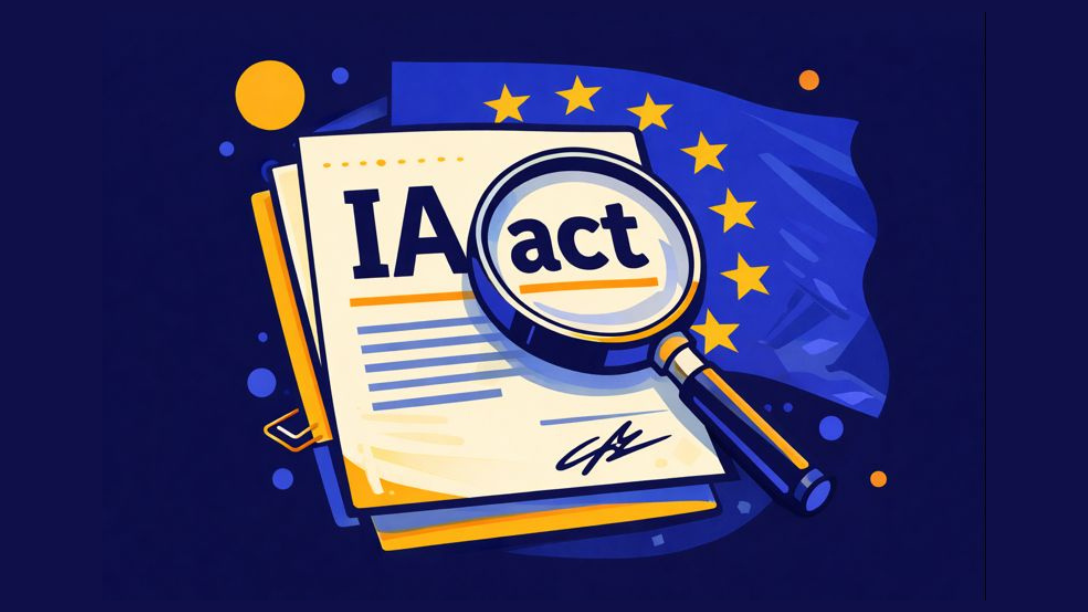
Artificial intelligence is rapidly transforming our lives and our work. Yet, this innovation raises a major question: how can we regulate AI to ensure it is safe, ethical, and beneficial for everyone? This is the goal of the AI Act, the European regulation that establishes clear rules for the use of AI in Europe.
The AI Act is the first European legislative framework designed to regulate artificial intelligence. Adopted by the European Commission, this regulation sets out obligations and limits for companies and organizations that develop or use AI systems, in order to protect users and ensure the ethical and transparent use of this technology.
Europe sought to avoid the pitfalls seen elsewhere in the world and ensure that AI serves the public interest. The European Parliament has focused on several priorities:
These objectives aim to protect citizens' fundamental rights while fostering responsible and secure innovation.
Certain practices are strictly prohibited, such as "social scoring" by public authorities or the use of subliminal manipulation to influence user behavior.
AI systems classified as "high-risk," such as those used in healthcare, transportation, or recruitment, must comply with strict obligations: transparency, traceability, and mandatory human oversight.
For generative AI, the regulation specifically requires:
The AI Act is more than just a list of prohibitions: it is fundamentally transforming how companies develop and use AI.
Transparency is a primary obligation for businesses. Companies must clearly inform users when a decision or content is generated by AI and explain the general functioning of their algorithms in an understandable way. This also involves:
Companies are now responsible for the impact of their AI systems. If a system causes harm, such as an unjustified credit denial or a discriminatory recommendation, they must be able to explain how the algorithm functioned and what measures were taken to prevent such risks.
The AI Act encourages the development of ethical and reliable solutions. Companies that invest in compliance can differentiate themselves in the market by:
In short, the AI Act pushes companies to be proactive, ethical, and transparent, while offering a unique opportunity to build trust and stand out in the European market.
For citizens, the AI Act provides:
In short, AI is becoming a safer and more understandable tool for everyone, thanks to the obligations that companies must implement. It is important to note that certain rights and mechanisms depend on the type of AI and its risk level, and that some measures are still under discussion or will be implemented gradually.
The AI Act marks a turning point for Europe. It emphasizes security, ethics, and accountability while leaving room for innovation. For businesses, it is a call to integrate AI in a thoughtful, transparent, and responsible manner. For citizens, it is the assurance of safer, fairer, and more understandable technologies.
With the AI Act, Europe is paving the way for a future where artificial intelligence can fully benefit everyone, with confidence and security. It is important to note that some provisions of the text are still under discussion and may evolve before final adoption.
Want to take your journey with responsible AI further?