AI Glossary – Part 3: Uses, Challenges, and Ethics of Artificial Intelligence
AI is about technology and use cases that are revolutionizing certain professions, but above all, it is about ethical challenges!
Pascal CONDAMINE
·
Dec 23, 2025
⚡️ TLDR
Regulation & Ethics: TheAI Act and the GDPR govern the use of AI through rules on governance, transparency, and human oversight to correct discriminatory biases in data and define legal liability in the event of an error.
Explainability (XAI) & Reliability: Making AI reasoning transparent (Explainable AI) and correcting hallucinations are essential conditions for building trust and deploying AI in critical sectors (healthcare, finance, justice).
Security & Robustness: Whileautomation and anomaly detection optimize processes, systems remain vulnerable to adversarial attacks (adversarial attacks), requiring continuous strengthening of their security.
Sobriety & Frugality: Given the high energy cost of large models (carbon footprint), frugal AI prioritizes lean, computationally efficient architectures while maintaining a high level of performance.
Artificial intelligence (AI) is more than just algorithms or models: it impacts our lives, our decisions, and our values. Understanding its uses, challenges, and ethics is essential to leveraging its benefits while minimizing risks. This third part of the AI glossary explores the concepts that define the real-world impact of AI, its limitations, and the ethical and regulatory questions it raises:
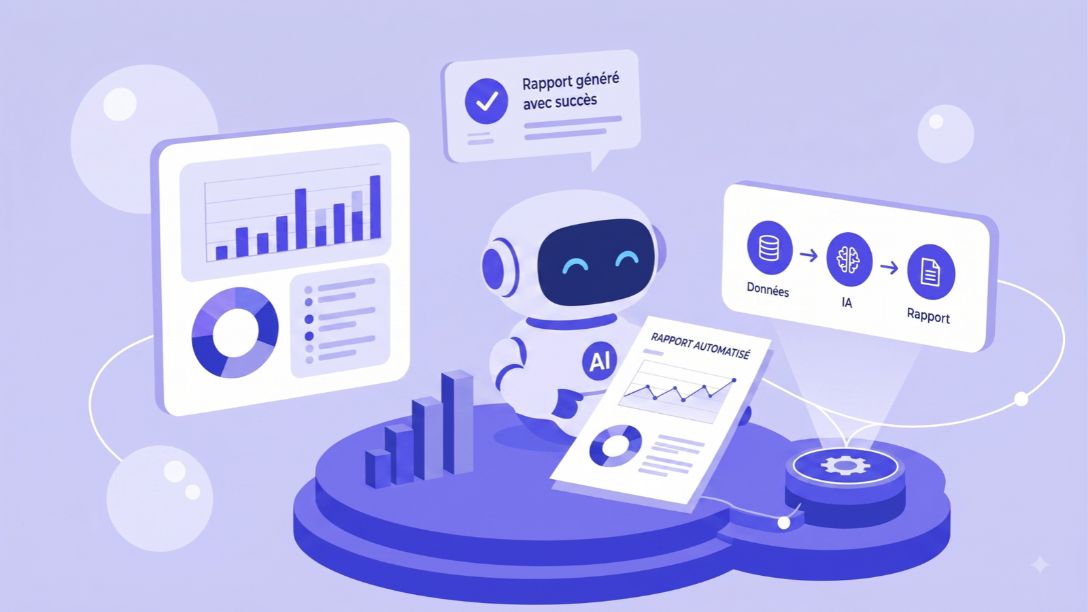
Automation
Artificial intelligence allows machines to take over repetitive or complex tasks, freeing up human teams for more strategic and creative activities. In business, it helps optimize processes, anticipate needs, and reduce human error. When designed thoughtfully, automation does not replace humans: it amplifies their capabilities and becomes a powerful driver of efficiency, innovation, and transformation.
Adversarial attack
A technique that involves making slight modifications to data (images, text, or sound) to deceive an AI model and trigger a prediction error. These attacks reveal the fragility of certain models when faced with minimal perturbations and highlight the importance of strengthening the robustness and security of AI systems.
Bias
Bias in artificial intelligence often stems from training data, which reflects real-world imbalances or prejudices. When left unidentified and uncorrected, these biases can be amplified by models, leading to unfair or discriminatory decisions. Detecting, measuring, and mitigating them is therefore essential to building AI systems that are equitable, transparent, and truly representative of user diversity.
Anomaly detection
A technique used to automatically identify unusual behavior in data streams. Used in finance (fraud), industry (equipment failure), or cybersecurity (intrusions), it helps quickly spot high-risk situations. Its effectiveness depends on data quality and the precision of detection thresholds.
Ethics
AI ethics seeks to ensure that systems respect human rights, dignity, and fundamental values. It is built on transparency, non-discrimination, and the protection of personal data. Ethical AI is not just high-performing; it is understandable, accountable, and beneficial for everyone.
Explainable AI (XAI)
Explainable AI aims to make model reasoning transparent, allowing users to understand how and why a decision was made. It sheds light on the criteria used by the AI to reach a result. This approach is essential for building trust, encouraging AI adoption, and ensuring accountability in sensitive contexts.
Explainability
Explainability refers to an AI's ability to justify its decisions and make its internal processes understandable to humans. It plays a vital role in sensitive fields such as healthcare, finance, and law, where every decision must be explainable.
AI carbon footprint
The environmental impact generated by training and using artificial intelligence models. Large models require energy-intensive data centers, leading to significant electricity consumption. Measuring and reducing this footprint has become a key issue for sustainable and responsible AI.
Frugality
Frugality in artificial intelligence aims to design models that are both high-performing and resource-efficient. It seeks to limit energy footprint and computing power consumption while maintaining high-quality results. This approach prioritizes efficiency and technological sobriety over the race for size or power, thereby fostering a more sustainable, responsible, and accessible AI.
AI governance
Artificial intelligence governance refers to the set of rules, processes, and practices that frame its development and use. It aims to ensure the quality, security, and ethics of deployed systems, while guaranteeing their compliance with laws and organizational values. When well-designed, it reconciles technological innovation with collective responsibility.
Hallucination
Generative AI models can sometimes produce erroneous information that is formulated in a credible way, a phenomenon known as hallucination. These errors stem from the probabilistic limitations of models, which seek to predict the most plausible response rather than the most accurate one. Identifying and managing these deviations is essential to ensuring the reliability, transparency, and trustworthiness of artificial intelligence systems.
Prediction
Prediction involves estimating a value, trend, or future event based on previously observed data. Predictive models are widely used in various fields such as maintenance, healthcare, marketing, and meteorology. Their reliability depends as much on the quality and representativeness of the data as on the accuracy of the assumptions made during their design.
Image recognition
This technology allows AI to identify objects, faces, or shapes in an image or video. It powers a variety of uses, from security and healthcare to mobility. Behind this apparent simplicity lie millions of parameters trained on massive volumes of images.
GDPR (General Data Protection Regulation):
A European legal framework aimed at protecting individuals' personal data. It requires companies to collect, process, and store data in a transparent, secure manner with explicit consent. In the context of AI, the GDPR ensures that models respect privacy and user control over their data.
AI Act
The European Union regulates the use of artificial intelligence through the AI Act, a legislative framework designed to ensure safe, ethical AI that respects fundamental rights. This regulation classifies systems according to their risk level and imposes requirements tailored to each, ranging from transparency to human oversight.
Accountability
When an artificial intelligence makes a mistake, the question of accountability arises: does it lie with the designer, the user, or the organization employing it? This debate is central to ethical and legal reflections surrounding AI. Clearly defining responsibilities helps prevent misuse, strengthen transparency, and build lasting trust in intelligent technologies.
Before making AI powerful, you must make it understandable. And when words become clear, decisions do too!